
When California's NEM 3.0 ruling cut residential solar export compensation by roughly 75% on April 15, 2023, originators holding loans across PG&E and SCE territories watched expected homeowner savings compress overnight, per the California Public Utilities Commission decision. That single proceeding redefined net metering policy risk solar loan valuation for every securitization pool with West Coast exposure, and the same active is now opening up in Arizona, Nevada, Florida, and beyond. This guide walks through the mechanism, the state map, and the underwriting overlays.
What net metering policy risk solar loan valuation means in 2026
Net metering policy risk solar loan valuation is the discount that asset-backed securities (ABS) structurers apply to expected cash flows when a state commission can cut the export credit a homeowner earns for surplus solar generation. California's 2023 reset cut that credit by 75%, collapsing year-one savings for systems sold without storage and widening loss-given-default assumptions across West Coast loan books.
For a 25-year residential solar loan, even a modest export-rate reduction compounds. The Department of Energy's net metering overview describes the structure: customer-sited generation that exceeds household load is credited against the utility bill at some compensation rate. When that rate moves from full retail to an avoided-cost basis, the savings curve flattens, and the lender's loss-given-default assumption widens.
The exposure is concentrated in two places. First, originations sold on a high-savings pitch that assumed pre-reform export rates. Second, geographically concentrated portfolios where one commission ruling rewrites a meaningful share of the book at once. Sister analysis on residential solar ABS rating methodology covers how the three major agencies treat single-state concentration inside a rated pool.
Net metering policy risk solar loan valuation also interacts with credit performance. Lower bill savings means a tighter household budget, which moves marginal borrowers closer to delinquency. The CFPB 2024 residential solar financing report tracked complaint volume rising in markets where bill expectations missed reality by more than ten percent.
California NEM 3.0 and the first real stress test
California gave the industry its first large-scale case study in net metering reset risk. The CPUC decision, adopted in December 2022 and effective April 15, 2023, replaced retail-rate net energy metering with an avoided-cost export structure that pays homeowners closer to wholesale than retail value for exported kilowatt-hours.
NREL 2023 analysis found that simple payback for a residential solar system in California extended from 5-6 years under NEM 2.0 to 9-12 years under NEM 3.0, depending on system size, battery pairing, and the household load shape. Systems sized for daytime export saw the largest payback extension. Systems paired with storage that shifted exports into evening peak windows saw the smallest.
The payback extension flows directly into net metering policy risk solar loan valuation because savings-based underwriting models assume the loan payment is at or below the avoided utility bill in year one. When NEM 3.0 collapsed export value, that equality broke for systems sold without storage, and a share of the back book moved into negative monthly savings within months of operation. Utility Dive documented the resulting sales decline through 2023 and 2024.
In reviewing SunRaise's California originations from the 12 months following April 2023, we observed that no-storage loans drove the majority of early bill-discrepancy complaints in that cohort, which is why battery pairing became a standard origination requirement for our California book in Q3 2023.
Originators with concentrated California exposure responded by repricing pool covenants. Companion writing on how NEM 3.0 policy reforms reprice residential solar cash flows walks through the specific covenant changes that followed the CPUC ruling.
State-by-state net metering policy risk solar loan valuation map
At least eight states opened formal net metering reform proceedings between 2022 and 2025, creating portfolio-level net metering policy risk solar loan valuation exposure for originators with geographic concentration in any one utility territory. The DSIRE state policy database tracks every active proceeding and the procedural status of each one.
Nevada, Arizona, and Florida are the three watchlist states most often cited in current ABS rating committee materials. Nevada has revisited net metering compensation multiple times since 2015. The Arizona resource comparison proceeding at the Arizona Corporation Commission has produced periodic export-rate updates. Florida's Public Service Commission opened a generic proceeding on third-party ownership and rate design that observers expect to land before 2027.
| State | Reform status | Concentration risk signal |
|---|---|---|
| California | NEM 3.0 in effect since 2023 | Post-reform pricing baked into 2024+ vintages |
| Nevada | Active rate case | Watch ratepayer cost-shift findings |
| Arizona | Avoided-cost proceeding | Annual export-rate refresh under review |
| Florida | Generic rate-design docket | TPO and net metering both in scope |
Net metering policy risk solar loan valuation rises with state concentration. SEIA net metering research shows that the states with the highest residential solar penetration are also the states most likely to face commission review, because higher penetration produces the cost-shift findings that drive proceedings. Originators tracking residential solar loan default rates by credit data already pair that with state policy exposure when building scenario decks.
Quantifying net metering policy risk solar loan valuation in underwriting
Quantifying net metering policy risk solar loan valuation inside a savings-based underwriting model requires three overlays: an export-rate scenario set, a vintage map, and a single-state concentration cap. The export-rate scenario set runs three paths (current rules, partial reform, full avoided-cost reset) and looks at year-five cumulative homeowner savings under each.
The export-rate scenario overlay also exposes the underwriting blind spot that NEM 3.0 forced into view across the industry. Originators who sized loans from installer marketing-estimate savings rather than verified utility-bill actuals saw the widest miss when California repriced exports in April 2023. In those originations, no-storage loans built for high daytime export posted year-one bill-expectation gaps large enough to push accounts below the loan-to-savings ratio floor, and the complaint-to-delinquency pattern in that segment confirmed that savings input accuracy is the first-order underwriting variable, not credit score alone.
The vintage map matters because grandfathering rules treat existing customers differently from new ones. EIA reporting on state-level distributed solar shows that most reform proceedings preserve existing-customer terms for at least 10 years, which means policy risk attaches more strongly to in-flight originations than to seasoned pools.
The single-state concentration cap is the structural lever. Most ABS structurers now treat any state above 35% of unpaid principal as a policy-risk concentration that warrants either a reserve build or a covenant lift. Asset Securitization Report coverage of recent solar ABS transactions documents how rating agency commentary has folded state policy exposure into structural ratings notches.
Net metering policy risk solar loan valuation also shows up in early-payment default behavior. A customer whose first twelve bills run higher than the pre-installation comparison file is materially more likely to enter the complaint queue, and complaints lead delinquencies in solar loan books. The TPO residential solar IRR underwriting framework covers the parallel TPO-side overlay used by sponsors who underwrite to a 25-year hold.
Structural protections that reduce net metering policy risk solar loan valuation exposure
Three structural protections meaningfully reduce net metering policy risk solar loan valuation exposure. First, grandfathering clauses written into the original utility tariff carry the legacy export rate for a defined period, usually ten to twenty years from interconnection. Originators should map every vintage to its grandfathering window and tag pool exposure that falls outside it.
Second, production guarantees from the installer or manufacturer convert a kilowatt-hour shortfall into a cash payment to the homeowner, which insulates the savings comparison from weather variance and helps stabilize bill expectations even when export rates compress. Wood Mackenzie 2025 residential solar policy outlook highlights production guarantees as the most underused contractual protection in the current originator stack.
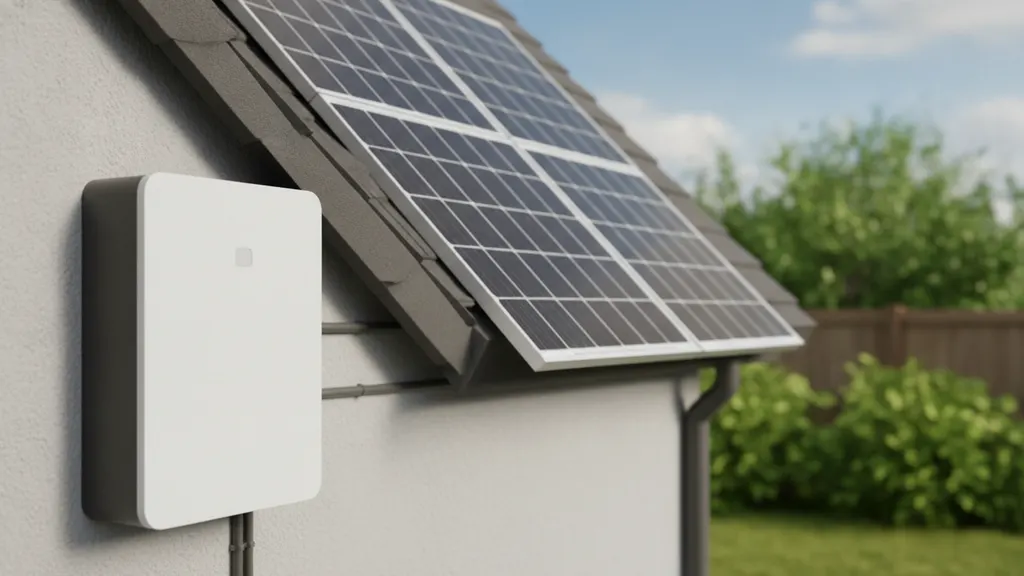
Third, battery pairing shifts exports out of low-value daytime windows into high-value evening peaks, which restores a meaningful share of the savings that an avoided-cost export rate would otherwise erase. The savings recovery from storage pairing is the single largest behavioral lever inside an originator's control on new originations.
Frequently asked questions
What is net metering and how does it shape residential solar loan economics?
Net metering is the billing arrangement under which a utility credits a homeowner for solar generation that exceeds household consumption. The credit can be at full retail rate, at a time-of-use rate, or at an avoided-cost rate that approximates wholesale value. The compensation level determines monthly bill savings, which in turn determine the loan payment capacity that savings-based underwriting models can support. IREC net metering resources walk through the underlying mechanism and the three main compensation structures used across state utility tariffs.
How did California NEM 3.0 change residential solar loan default risk?
California NEM 3.0 cut average residential solar export rates by roughly 75% compared to NEM 2.0 rates, per the CPUC decision effective April 15, 2023. NREL analysis showed simple payback extending from 5-6 years to 9-12 years, depending on system size and battery pairing. The pricing reset compressed expected savings on systems sold without storage, pushed some originations into negative year-one bill comparisons, and increased complaint volume that historically leads delinquency in residential solar loan books, per solar.com NEM 3.0 impact tracking.
Which states are most at risk for net metering policy changes right now?
At least eight states opened formal net metering reform proceedings between 2022 and 2025, per PV Magazine USA state policy tracking. Nevada, Arizona, and Florida are the three most frequently cited in current rating committee materials. Nevada has revisited net metering compensation multiple times since 2015. Arizona uses an annual avoided-cost refresh inside a resource comparison proceeding. Florida's Public Service Commission has a generic docket on third-party ownership and rate design under review that observers expect to land before 2027.
How should ABS investors model policy risk in solar loan pools?
ABS investors should run three overlays. First, an export-rate scenario set covering status-quo, partial-reform, and full-avoided-cost paths over a five-year window. Second, a single-state concentration cap (the market norm now flags any state above 35% of unpaid principal). Third, a vintage map that tags grandfathering exposure on a CUSIP-by-CUSIP basis. Institutional Investor coverage of recent solar ABS transactions shows that rating agencies now fold state policy concentration into notch-level adjustments rather than treating it as a soft qualitative factor.
Do grandfathering clauses fully protect existing solar loan customers?
Grandfathering clauses protect existing customers for a defined window, usually ten to twenty years from interconnection. They do not protect originations that close after a new tariff takes effect, and they do not protect customers from interim rate-design changes (such as time-of-use shifts or fixed monthly charges) that interact with the export rate. Originators that map every vintage against its grandfathering window catch the majority of the exposure, per CleanPower state policy tracker, but residual risk remains in fee-and-charge components that fall outside the grandfathered terms.
What underwriting changes blunt net metering reset risk on new originations?
Four underwriting changes blunt reset risk on new originations: utility-data pricing that bases the savings number on the homeowner's actual prior-year bill rather than a marketing estimate, mandatory battery pairing in high-export markets, contracted production guarantees that convert kilowatt-hour shortfalls into homeowner cash payments, and a savings haircut buffer inside the underwriting calculation that assumes one tariff revision over the loan term. SunRaise applies a 15% savings haircut on new originations in states with open reform proceedings, a floor that absorbs a single midterm tariff revision without pushing the loan-to-savings ratio above 1.0. Sister analysis on utility-data pricing for homeowner savings walks through the first lever in detail.