
Eighty percent of global polysilicon production originates in Xinjiang, China, and that single supply chain fact is now the axis on which FEOC solar compliance 2026 IRA enforcement turns. Treasury's finalized guidance conditions the 30% Investment Tax Credit on documented supply chain provenance for every placed-in-service residential solar system. Dealers without a FEOC-clean bill of materials lose the credit before the contract is countersigned.
What is FEOC solar compliance 2026 IRA and why it matters now
The Foreign Entities of Concern restriction in the Inflation Reduction Act cuts off federal tax credits for clean energy systems using components sourced from companies linked to China, Russia, Iran, or North Korea. For residential solar, FEOC solar compliance 2026 IRA enforcement means every module, cell, wafer, and inverter in a placed-in-service system must trace to a non-FEOC supply chain. The Department of Energy's FEOC determination framework published in late 2024 sets the attestation standards that both financiers and dealers must meet to preserve ITC eligibility.
The rule carries real portfolio stakes. Capital originators holding TPO contracts on FEOC-linked systems carry stranded credits and a direct portfolio liability. For SunRaise Capital, every submission that fails the FEOC screen represents an IRR miss for our capital partners before the asset enters the securitization pool.
For a closer look at this, see Solar TPO vs loan installer economics: 2026 dealer cash flow guide.
For a closer look at this, see FERC Order 2023 and solar interconnection queue reform 2026 guide.
For a closer look at this, see IRA domestic content bonus credit solar 2026: 10% adder impact.
There is a full breakdown of this topic in FERC Order 2023 solar interconnection: 2026 developer guide.
There is a full breakdown of this topic in IRA Tax Credit Transfers: Solar Investor Guide to Section 6418.
For a closer look at this, see Solar construction bridge financing: NTP-to-PTO loan pricing 2026.
We cover the details separately in FERC Order 2222 VPP financing: solar storage DER revenue 2026.
The residential solar supply chain problem in 2026
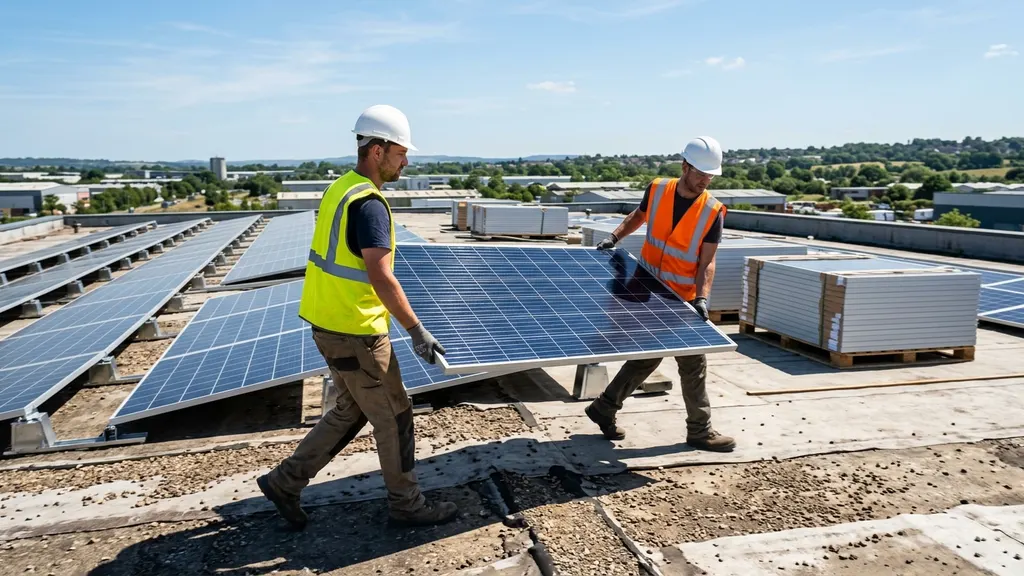
China's grip on solar manufacturing is documented: polysilicon from the Xinjiang Uyghur Autonomous Region supplies an estimated 80% of global solar panel production, per SEIA's 2024 Solar Market Insight. The Uyghur Forced Labor Prevention Act already creates a rebuttable presumption that Xinjiang-origin goods involve forced labor. FEOC rules add a tax credit ineligibility trigger on top of that presumption for residential solar systems placed in service after January 1, 2026.
For FEOC solar compliance 2026 IRA purposes, the practical problem for dealers is documentation depth. Module manufacturers must provide cells-to-wafer-to-polysilicon traceability, and many Southeast Asian assemblers using Chinese-origin feedstock cannot produce the full chain-of-custody required by IRS attestation standards. The National Renewable Energy Laboratory's supply chain traceability analysis has found that fewer than 20% of module brands currently shipping to the US can produce a full non-FEOC attestation without supplemental third-party audit.
There is a full breakdown of this topic in Residential solar financing alternatives 2026: the post-distress map.
There is a full breakdown of this topic in Institutional capital residential solar TPO investment: 2026 outlook.
How FEOC solar compliance 2026 IRA affects TPO capital underwriting
For capital partners and TPO originators, FEOC solar compliance 2026 IRA creates a direct underwriting variable that reprices deal economics before a contract is submitted. A TPO contract on a system using FEOC-linked modules cannot claim the 30% ITC. That removes the tax equity return from the deal structure and widens the IRR requirement for every downstream investor in the securitization stack.
At SunRaise Capital, our underwriting checklist includes a FEOC attestation gate before a contract enters the pricing queue. A dealer submission without module-level provenance documentation is flagged for remediation rather than priced. This protects capital partners from holding assets with stranded credits and keeps our ABS pools in compliance with rating agency methodology. For more on how IRR is built into the deal structure, see our TPO residential solar IRR underwriting framework.

For a closer look at this, see Commercial Solar PPA Underwriting: C&I Deal Bankability in 2026.
We cover the details separately in Solar loan portfolio acquisition underwriting 2026: buyer risk playbook.
For a closer look at this, see Agrivoltaic Solar Project Finance: Dual-Use Land Underwriting 2026.
The 45X and 48E nexus: where tax credits meet FEOC rules
Two IRA credit tracks interact with FEOC solar compliance 2026 IRA in ways that affect different layers of the capital stack. Understanding both prevents structural gaps in 2026 and 2027 residential solar deal origination.
The 45X Advanced Manufacturing Production Credit applies to US-based manufacturers producing solar cells, wafers, and modules. A domestic manufacturer claiming 45X cannot use FEOC-sourced inputs - the credit is voided if FEOC-linked materials enter the bill of materials. This creates a direct incentive to source non-FEOC polysilicon from Norway, Canada, or domestic producers, even at a premium over Xinjiang-origin product.
The 48E Clean Energy Investment Credit, the post-OBBBA successor to Section 48, applies directly to residential solar installations. As our post on the 48E TPO solar tax credit 2027 federal pathway explains, 48E preserves the FEOC restriction and adds a domestic content bonus rewarding FEOC-clean US-manufactured systems. For capital partners underwriting 2026 and 2027 TPO pools, the combined 48E plus domestic content adder (up to 10 percentage points) is only achievable with a fully documented non-FEOC supply chain.
FEOC solar compliance 2026 IRA: what installers must document
Dealers and installers carry the documentation burden that makes the FEOC attestation work. In the FEOC solar compliance 2026 IRA framework, the IRS expects a tiered evidence package for each placed-in-service system. Missing even one tier can trigger full credit disallowance on audit.
| Documentation Layer | Required Content | Who Provides It |
|---|---|---|
| Module-level attestation | Manufacturer FEOC certification, cell and wafer origin | Module OEM or distributor |
| Polysilicon traceability | Refinery name, country, UFLPA audit status | Tier-1 or Tier-2 supplier |
| Inverter declaration | Component origin for semiconductor elements | Inverter OEM |
| Installer self-certification | Signed attestation affirming due diligence | Installing dealer |
The Solar Energy Industries Association's FEOC Compliance Toolkit maps this documentation chain to DOE standards and is the fastest orientation for installers new to the requirement. For dealers working with SunRaise Capital, our origination portal includes a FEOC attestation upload step that validates the module manufacturer against our approved-vendor list before the contract enters the pricing queue. This reduces kitchen-table cycle time: the dealer knows before the close whether the product qualifies.
Securitization and ABS rating exposure for non-compliant residential solar pools
Investors in residential solar ABS need to understand how FEOC solar compliance 2026 IRA flows through a pool. If a material share of contracts used FEOC-linked modules, the associated ITC value is unavailable to the tax equity investor, and the residual cash flow model requires repricing before the pool can be marketed.
KBRA and DBRS Morningstar have both updated their residential solar rating criteria to include FEOC compliance as a disclosure requirement. Our post on residential solar ABS rating methodology: KBRA, DBRS, Moody's covers the full rating framework. In brief: pools with more than 15% FEOC-exposed contracts by notional value face a tiering adjustment that widens the credit enhancement requirement. For a $50 million pool, that can mean $2 to $3 million in additional overcollateralization.
The SEC has signaled attention to supply chain disclosures for ABS issuers under Regulation S-K. Originators without documented FEOC compliance controls face disclosure risk that institutional ABS buyers price. Capital partners should request FEOC attestation rates as a standard data point in monthly pool reporting. For the interaction between storage credits and this ITC framework, see our post on IRA storage ITC: solar-plus-storage underwriting in 2026.
Frequently asked questions
What does FEOC mean for residential solar tax credits in 2026?
FEOC stands for Foreign Entity of Concern, a designation covering companies linked to China, Russia, Iran, or North Korea under IRA clean energy provisions. Any residential solar system placed in service after January 1, 2026 using FEOC-linked components is ineligible for the 30% Investment Tax Credit. This applies to modules, cells, wafers, and certain inverter components. Homeowners and dealers who skip supply chain verification risk losing the full credit value on audit. The Department of Energy publishes the current FEOC entity list and interim attestation guidance for each component category.
Which solar panel brands are FEOC-compliant in 2026?
No single public registry of FEOC-compliant residential solar brands exists as of mid-2026, but the clearest path runs through manufacturers with full supply chain transparency: US-produced panels and Asian manufacturers who publish third-party chain-of-custody audits traceable to non-FEOC polysilicon. The SEIA FEOC Compliance Toolkit provides a framework for evaluating brand claims against the DOE standard. SunRaise Capital maintains an approved-vendor list for TPO origination partners, updated quarterly as new audit results arrive from accredited testing laboratories.
How do I verify that my solar system qualifies for the ITC under FEOC rules?
Ask your installer for the module manufacturer's FEOC attestation letter, which should trace polysilicon source to a non-FEOC refinery and confirm cell and wafer manufacturing location. Cross-reference the manufacturer against the DOE FEOC entity list. For inverters, request the component origin declaration from the OEM. The National Renewable Energy Laboratory has published supply chain traceability guidance that walks through each documentation step for residential solar. If your installer cannot produce these documents, switch to an approved-vendor product before the system is placed in service.
What happens to my ITC if my installer used FEOC components?
If your residential solar system includes components from a FEOC-linked manufacturer, the 30% ITC claimed on your federal return is at risk of disallowance on audit. The IRS may assess the full credit as a deficiency plus interest. Homeowners who relied on installer representations may have a contractual claim against the dealer, but recovering the credit value after the system is placed in service is difficult and costly. The Consumer Financial Protection Bureau has published guidance on consumer rights in solar financing disputes covering credit disallowance scenarios in detail.
How does FEOC compliance affect solar TPO securitization?
For residential solar ABS, FEOC solar compliance 2026 IRA determines whether the ITC is available to the tax equity partner in the deal structure. A pool with a high proportion of FEOC-exposed contracts faces reduced tax credit benefit, lower IRR for the tax equity investor, and wider credit enhancement requirements for rating agency purposes. According to PV Magazine USA's residential solar ABS market coverage, KBRA and DBRS have both updated their rating methodology to require FEOC disclosure as a standard deal data point in every offering document.
What documentation do installers need to prove FEOC compliance to a capital partner?
Capital partners require a four-layer evidence package: the module OEM's FEOC certification tracing cells and wafers to non-FEOC sources; a polysilicon provenance audit referencing the refinery name and UFLPA compliance status; the inverter manufacturer's component origin declaration; and the dealer's signed self-certification. The Energy Information Administration tracks US solar module import volumes by origin country, providing independent market context for documentation review. Dealers who pre-load this package into the origination portal reduce cycle time and avoid credit flags at funding.