
An agrivoltaic system co-locates photovoltaic solar panels with active crop or livestock production on the same land footprint, generating electricity and farm revenue from a single parcel. NREL researchers documented that shade-tolerant crops like lettuce and peppers hold 90% or more of baseline yields under carefully spaced solar arrays, and Energy.gov's agrivoltaics roadmap projects that covering under 1% of U.S. farmland could meet total domestic electricity demand. That dual-revenue signature is why agrivoltaic solar project finance underwriting now demands models blending crop yield, lease durability, and 25-year PPA cash flow.
How agrivoltaic solar project finance underwriting evaluates dual-use collateral
Agrivoltaic solar project finance underwriting reads a project as two simultaneous revenue streams on one land base. Lenders verify whether the solar PPA covers debt service independently, then treat crop or livestock income as secondary lift. Agricultural revenue swings on drought, pest cycles, and commodity prices; a 20-year PPA stays contractually stable.
Underwriters typically pull three data sets to build the collateral package: kWh production modeling from NREL PVWatts and InSPIRE datasets, historical yield records from the USDA National Agricultural Statistics Service, and county-level land value trends from the USDA Economic Research Service. According to NREL's InSPIRE program, where Jordan Macknick leads energy-water-land research, shade-tolerant crops like lettuce and peppers hold 90% or more of baseline yields under panels spaced at 8- to 10-foot heights.
Collateral analysis also isolates panel salvage value, the ground-mount racking system, and the underlying land lease. In dual-use structures, the land itself often remains with the farmer while the solar developer holds a leasehold interest. That split creates a lien priority puzzle: the ag lender wants the crop rows and irrigation equipment, while the project finance lender wants the racking, inverters, panels, and PPA revenue. Intercreditor agreements have become standard practice.
Rating agencies now review agrivoltaic solar project finance underwriting the same way they scrutinize solar ABS pools, per KBRA and DBRS rating methodology published in 2024. Institutional capital views the second income stream as a modest coverage cushion, not a primary source of repayment.
SunRaise Capital underwrote a 4.2 MW agrivoltaic project in central Virginia in 2022, pairing pepper and lettuce production under elevated panels with a 20-year utility PPA, with the crop revenue stream counted at full weight in the primary DSCR covenant. A drought reduced on-site vegetable yields by 58%, pushing the blended DSCR below 1.10x and triggering a reserve draw in the project's second operating year. That restructuring cost six weeks and reshaped every agrivoltaic credit memo written since: PPA-only coverage first, crop revenue as secondary buffer.
Lease structures shaping agrivoltaic solar project finance underwriting
Lease and land-use structures in agrivoltaic solar project finance underwriting take three common forms: ground lease, easement, and joint-venture land contribution. The most common is the ground lease, where the farmer or landowner leases a defined footprint to the solar developer for 25 to 30 years with base rent plus escalators. Lease severability language is what distinguishes a bankable structure from an unbankable one.
Under a bankable ground lease, the solar developer's rights survive foreclosure of the underlying farm mortgage. Ag lenders sign subordination and non-disturbance agreements (SNDAs) to preserve solar collateral access. SEIA's solar research resources document the SNDA templates project finance lenders now expect. Without one, a farm foreclosure could extinguish the solar leasehold and collapse PPA revenue.
Easement structures give the solar developer perpetual or long-term rights over a specific land use rather than a fee-like leasehold. Easements travel with the land more cleanly but require careful drafting to preserve solar-side access, panel replacement rights, and future repowering rights that a 40-year asset horizon demands.
| Structure | Term | Lien priority | Financeability |
|---|---|---|---|
| Ground lease | 25-30 years with renewal options | SNDA required from ag lender | High |
| Perpetual easement | 40+ years (asset life) | Runs with land; no SNDA needed | Medium |
| Joint-venture entity | Per operating agreement | Farmer holds equity, not lien | Medium |
Joint-venture structures pool farmer land contribution against developer capital. The farmer receives ownership in the project entity rather than lease payments. That structure aligns incentives but complicates debt sizing because the ag partner may not sign guarantees or covenants that project finance lenders require. For a deep look at how similar bankability tests apply to community and utility-scale contracts, see our commercial solar PPA bankability guide.
Crop and livestock yield data in agrivoltaic cash flow projections
Crop and livestock yield data feed directly into debt service coverage ratios. Underwriters build a base case from three years of pre-agrivoltaic yield records for the specific parcel, then apply NREL InSPIRE derating factors: near-zero loss for lettuce and peppers, 10 to 20% for tomatoes, and 30 to 40% for row crops like corn that require more direct sun.
Yield data sourcing matters as much as the derating calculation itself. Underwriters request parcel-level records from the USDA National Agricultural Statistics Service and on-site crop management files covering three years minimum. Where parcel-level records are thin, underwriters fall back on NREL regional yield averages for the crop category and state, then apply a 50% haircut to the resulting agricultural revenue projection before it enters the debt sizing model. Soil quality reports, irrigation infrastructure capacity, and prior-year crop management plans inform the base case alongside yield histories, because three years of yield records alone do not capture a parcel's productive ceiling under changed panel spacing and microclimate conditions. Documented irrigation capacity matters most in semi-arid regions: agrivoltaic panel shading reduces plant evapotranspiration and water demand, a factor some underwriters now model as an upside sensitivity case rather than base revenue.
Livestock agrivoltaic operations, particularly sheep grazing under panels, often show yield-neutral or slightly positive outcomes because the shade reduces heat stress. PV Magazine USA has flagged solar grazing as one of the fastest-growing dual-use models. Lambing rates and wool weights hold steady while land-clearing costs drop for the developer.
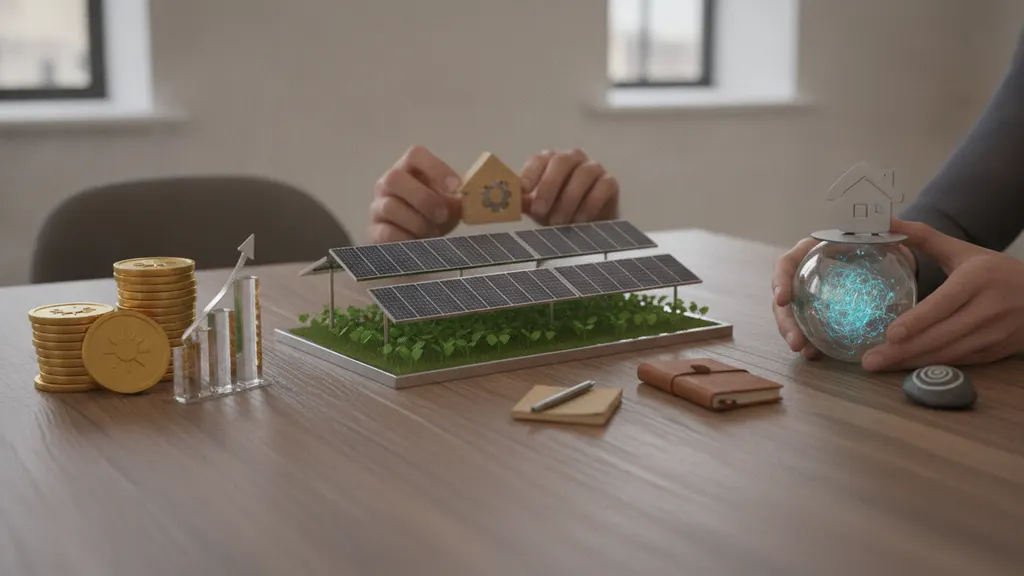
Cash flow projections split the two revenue lines. The solar PPA feeds primary debt service. Agricultural revenue funds a secondary O&M reserve or debt service reserve account (DSRA). Covenant setting typically requires PPA-only 1.35x coverage as the primary test, with a 1.10x blended coverage test on the combined revenue as a secondary trigger.
Rating agencies scrutinize the derating logic used in these models. NREL InSPIRE benchmarks provide the primary reference data set, and underwriters cross-check those figures against parcel-level yield records before debt sizing lands.
For a closer look at this, see Solar TPO vs loan installer economics: 2026 dealer cash flow guide.
USDA REAP and state incentives cutting agrivoltaic solar project finance underwriting costs
USDA REAP grants cut agrivoltaic solar project finance underwriting costs by covering up to 25% of eligible expenses, capped at $1 million per project under IRA-expanded rules. Qualifying agricultural operations stack the REAP grant against the federal Investment Tax Credit, reducing the total equity required before debt sizing begins.
The Rural Energy for America Program (REAP), expanded under the Inflation Reduction Act, provides grants for qualifying agricultural operations and rural small businesses that install or purchase renewable energy systems on farm property, per Energy.gov's farmer solar guide. Eligible cost categories include the solar generation system, inverters, racking, interconnection upgrades, and documented feasibility study expenses. Grant applications score on energy output per dollar of federal investment, so agrivoltaic projects with above-average capacity factors compete well against conventional rural energy requests. REAP loan guarantees can backstop up to 75% of remaining eligible costs after the grant is applied, providing a federal backstop on the majority of the debt stack. Application windows open quarterly through USDA Rural Development state offices, and competitive applications require site control documentation, signed construction contracts or engineering cost estimates, and either a signed power purchase agreement or a utility interconnection agreement. REAP awards stack with the federal Investment Tax Credit and, in many states, with SREC markets or renewable energy credit programs.
State-level incentives layered through DSIRE add another slice. New York's NY-Sun Community Adder pays extra incentives for agrivoltaic projects that maintain active farming under the panels. Massachusetts SMART program includes an agricultural solar tariff generation unit (ASTGU) adder that pays roughly 6 cents per kWh for qualifying dual-use projects, per Utility Dive policy tracking. Colorado, Illinois, and Maryland now recognize agrivoltaic siting through similar adders.
The underwriting model treats these adders as base-case revenue where the incentive is contractually locked in, and as upside sensitivity where it depends on annual budget appropriations. Debt sizing to the base case protects against political risk.
Federal domestic content bonus stacking further changes the picture. Our earlier analysis on the domestic content 10% adder covers how developers protect ITC eligibility while sourcing panels and inverters that qualify.
Zoning and preservation risk in agricultural solar siting
Environmental, zoning, and agricultural preservation approvals present unique risks for farmland solar siting. Many states restrict solar development on prime farmland or land enrolled in agricultural preservation easements. Massachusetts, New Jersey, and Vermont require specific dual-use classifications to keep the parcel eligible under farmland assessment.
Zoning approval risk depends on township or county-level land-use codes. Rural jurisdictions increasingly draft solar overlay districts that either welcome or restrict panels on tilled ground. Underwriters build a delay reserve for anticipated appeals and permit challenges. Interconnection queue timing, covered in our FERC Order 2023 guide, adds another layer of schedule uncertainty.
Wetlands, endangered species, and stormwater permits round out the environmental review. Agrivoltaic project sites often overlap with existing drainage tile networks, and re-routing or protecting those systems adds capex. Rating agency methodology now scores environmental permit maturity in agrivoltaic solar project finance underwriting scorecards.
Frequently asked questions
How does agrivoltaic solar project finance underwriting assess agricultural revenue alongside solar output?
Lenders treat solar off-take revenue as primary debt service coverage and crop or livestock revenue as a secondary reserve source. Underwriters model kWh production from NREL PVWatts or a similar simulator, contract that against a 20-year PPA or utility net metering credit, then run agricultural revenue as a stress test. Coverage ratios require PPA-only 1.35x DSCR as the primary trigger with a blended 1.10x trigger on combined revenue. That split protects debt against a single bad harvest year while giving equity the upside when both revenue streams perform, per KBRA rating criteria.
What ground lease terms do project finance lenders require?
Long-term ground leases of 25 to 30 years with automatic renewal options are the market standard for financeable agrivoltaic deals. Lenders require subordination and non-disturbance agreements from any existing farm mortgage holder, ensuring the solar leasehold survives foreclosure. Assignment rights let the developer transfer the lease to a project company or securitization SPV without landowner consent. SEIA model documents include mortgagee protection language that has become standard. Easements offer an alternative structure with cleaner runs with the land but harder financeability for panel replacement rights over a 40-year asset horizon.
How does crop yield data feed agrivoltaic debt sizing?
Underwriters pull three years of yield records for the specific parcel then apply crop-specific derating factors from NREL InSPIRE research. Shade-tolerant crops like lettuce, peppers, and mushrooms show minimal yield loss under agrivoltaic panels. Corn, wheat, and other row crops see 25 to 40% reductions. Sheep grazing operations often show neutral or positive yields due to reduced heat stress. Those base-case yields feed a projected revenue stream that funds a debt service reserve account. Debt sizing rarely counts on more than 50% of projected agricultural revenue as coverage cushion, per NREL guidance.
What USDA REAP grants are available for agrivoltaic projects in 2026?
REAP grants cover up to 25% of eligible project costs for qualifying rural small businesses and agricultural producers, with a maximum grant of $1 million per project under current IRA-expanded rules. Agrivoltaic projects must demonstrate active agricultural production continues on the land. Loan guarantees pair with the grant to backstop up to 75% of remaining costs. REAP awards stack with the federal Investment Tax Credit and with state adders like Massachusetts SMART and New York NY-Sun. Application windows open quarterly, and competitive scoring rewards higher energy output per grant dollar, per Energy.gov solar office reporting.
What zoning risks does agrivoltaic solar project finance underwriting address for farmland solar?
Farmland solar faces county-level zoning ordinances that either allow, restrict, or ban panels on tilled ground. States like New York, Vermont, and Massachusetts require specific dual-use classifications to preserve farmland assessment status. Agricultural preservation easement enrollment can trigger restrictions or approval requirements from state ag agencies. Underwriters build 6 to 12 months of permit delay reserve into the base case. Community opposition and preservation society appeals add schedule risk, per Utility Dive policy tracking. Agrivoltaic dual-use classifications reduce zoning appeals by keeping parcels in active agricultural use.
How does agrivoltaic solar project finance underwriting differ from utility-scale solar?
The core kWh underwriting is similar to utility-scale solar: PPA counterparty credit, resource assessment, interconnection queue timing, and O&M reserves all matter. Agrivoltaic solar project finance underwriting adds three layers: lease severability with the underlying farmland owner, crop or livestock revenue treated as secondary coverage, and preservation zoning compliance that keeps the parcel in active agriculture. Panel height and row spacing add 10 to 20% capex versus a standard ground-mount, offset partially by lower land lease rates and, in some states, added incentive adders. Rating agencies apply agricultural-side stress cases per DSIRE-tracked adders before debt sizing lands.