
Wood Mackenzie projects U.S. battery storage installations will exceed 30 GW of annual additions by 2030, and a growing share is standalone BESS rather than co-located with solar. That shift has rewritten standalone battery storage project finance underwriting in 2026: different revenue stack, different degradation math, different Section 48E mechanics. Lenders who priced storage off solar credit memos are watching DSCR break, and the institutional capital chasing this asset class is rewriting credit memos on the fly.
How standalone battery storage project finance underwriting differs from solar-plus-storage
Solar-plus-storage deals credit battery cash flow against an investment-grade PPA counterparty. Standalone battery storage project finance underwriting has no such anchor: projects closing on merchant structures raise only 45-55% senior debt at 1.30-1.40x P50 DSCR, versus 60-65% at 1.20x P90 on contracted deals, and the credit memo must model capacity auctions, ancillary services, and arbitrage spreads as independent revenue lines with distinct counterparty risk.
A co-located solar-plus-storage deal often gets blended underwriting credit from the host PPA. The storage merely shifts solar output, and the storage cash flow inherits the PPA counterparty's investment-grade rating. Standalone BESS strips that comfort away. Lenders model each revenue stream separately, stress each counterparty independently, and run cycle-by-cycle dispatch optimizations rather than annual energy yields. The U.S. Department of Energy storage program office publishes reference cases that illustrate the modeling delta. Our prior work on solar-plus-storage ITC underwriting covers the co-located comparison in more depth.
Revenue stack: capacity, ancillary, arbitrage
Three revenue streams drive standalone BESS cash flow, and standalone battery storage project finance underwriting models each as an independent line item rather than a blended energy price. ERCOT merchant arbitrage P50 projections run $40-90/kW-yr, CAISO RA payments add $50-180/kW-yr depending on duration, and PJM capacity auction results carry four-year forward price visibility that lenders can size senior debt against.
PJM, ERCOT, and CAISO meter and pay these streams differently. Capacity payments come from RTO/ISO capacity auctions or bilateral contracts; ancillary services include frequency regulation, spinning reserves, and reactive power; energy arbitrage exploits intraday price spreads. ERCOT's energy-only market produces volatile, high-variance arbitrage revenue. CAISO's Resource Adequacy framework adds a third pattern. FERC Order 841 opened wholesale markets to storage participation in 2018, and capacity accreditation rules continue to evolve as battery penetration grows.
Lenders sizing debt against these projections typically discount the merchant component 30-50% and apply a P90 case to the contracted stack, per Wood Mackenzie market tracking.
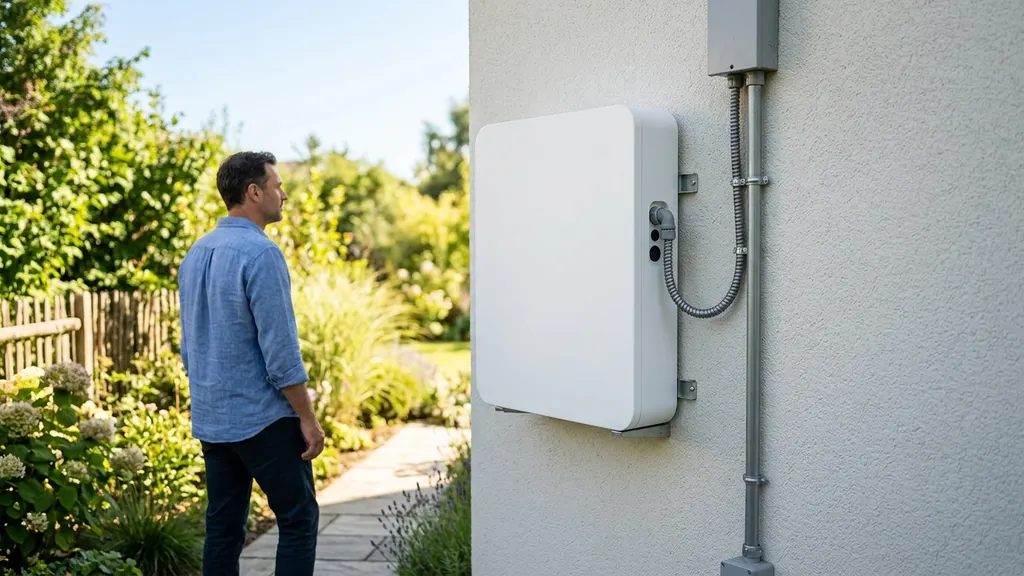
Cycle degradation in standalone battery storage project finance underwriting
Lenders sizing 15-20 year debt against a battery asset must model capacity fade. Standalone battery storage project finance underwriting typically assumes 2-3% per-year energy throughput degradation plus an OEM augmentation schedule. Sandia field data anchors the curve, and warranty step-downs from major cell suppliers define the floor on usable capacity through year 10.
The augmentation schedule itself is a cost line. Lenders include a sinking fund or annual augmentation capex reserve in the financial model, typically $4-12 per kWh-year depending on chemistry. LFP cells, now dominant in stationary applications, hold capacity better than NMC and reduce warranty payout risk. Sandia National Laboratories battery storage field studies show that thermal management quality drives a wider band of outcomes than chemistry alone.
OEM warranties typically guarantee 70% nameplate capacity through year 10, falling to 60% by year 15. Lenders haircut beyond warranty terms. Performance guarantees from the integrator stack on top of cell warranties create a layered risk allocation that mirrors the approach used in solar O&M. Our TPO residential solar IRR framework discusses warranty-stacking logic that maps directly onto storage.
Contractual structures supporting standalone battery storage project finance underwriting
Tolling agreements transfer dispatch rights to an offtaker in exchange for a fixed capacity payment, and lenders reward that contractual certainty with 1.20x P90 DSCR sizing, the same floor applied to investment-grade contracted solar. Standalone battery storage project finance underwriting gets structurally simpler once a tolling counterparty absorbs dispatch volatility, converting merchant cash flow into a contracted profile lenders can model like solar.
Capacity contracts with utility offtakers operate similarly: the utility pays a fixed kW-month rate for committed capacity, and the developer keeps energy and ancillary upside. Hybrid tolls with floor pricing share the upside. ERCOT projects increasingly use bespoke hedge structures with financial counterparties to convert merchant exposure into a quasi-contracted profile. The EIA monthly battery storage report tracks contracted versus merchant capacity additions by region.
| Structure | Senior debt sizing | Equity IRR target |
|---|---|---|
| Tolling agreement | 1.20x P90 DSCR | 9-11% |
| Capacity contract | 1.25x P90 DSCR | 11-13% |
| Hybrid hedge | 1.30x P50 / 1.10x P90 | 13-15% |
| Pure merchant | 1.40x P50 DSCR | 15-18% |
Term length matters. A 7-year tolling agreement on a 20-year debt tenor leaves a refinancing tail; lenders amortize harder during the contracted window or require a cash sweep post-toll. Domestic content rules from the Inflation Reduction Act intersect with offtake structure, since projects qualifying for the 10% domestic content adder typically clear higher debt ceilings. See our domestic content bonus credit analysis for the mechanics.
Section 48E and the capital stack in standalone battery storage project finance underwriting
IRA Section 48E created a technology-neutral investment tax credit covering standalone energy storage systems first placed in service after December 31, 2024, at a base rate of 30%. Bonus adders for domestic content (10%) and energy community siting (10%) can push total ITC to 50%. This rewrites the equity-debt-tax-equity arithmetic for standalone battery storage project finance underwriting.
Before 48E, standalone storage was ineligible for an ITC unless charged primarily from co-located solar. The change pulled standalone projects into the same tax equity universe as solar. Tax equity now takes a Section 50(d) income allocation against the ITC plus step-up depreciation benefits. Transferability under Section 6418 lets developers monetize the credit through a direct sale rather than syndicated partnership, simplifying the capital stack. The DOE 48E technical guidance details qualification rules. In the standalone BESS transactions SunRaise Capital has structured since 48E became effective, we have seen developers default to transferability on mid-size credits rather than running a tax equity syndication process, cutting weeks from the closing timeline.
Capital stacks now typically run 50-55% senior debt, 20-25% tax equity, 20-30% sponsor equity. FEOC compliance rules, which restrict prohibited foreign entity involvement, create a sourcing constraint that affects ITC eligibility. Our FEOC solar compliance brief breaks down the implications, which apply directly to storage projects on the same framework.
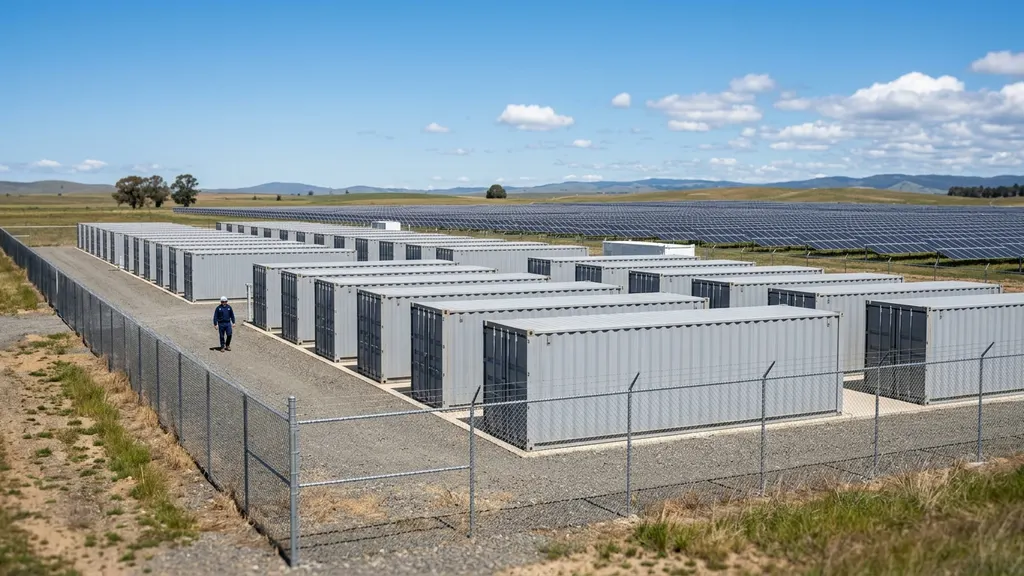
Merchant risk premium in standalone battery storage project finance underwriting
Merchant BESS projects without a long-term capacity contract or tolling agreement typically require equity returns 300-500 basis points higher than fully contracted projects, according to project finance market data. Standalone battery storage project finance underwriting prices this risk through a thinner senior tranche, a fatter equity check, and DSCR sizing on P90 cash flow. On the merchant BESS term sheets SunRaise Capital has reviewed since 2025, every senior lender in the first round requested a hedge layer before confirming a term, even on projects where the sponsor viewed it as optional.
Lenders typically cap senior debt at 1.30-1.40x P50 DSCR or 1.10-1.15x P90 DSCR on merchant projects, versus 1.20x P90 on contracted toll structures. The merchant equity holder absorbs the volatility and is compensated accordingly. Recent ABS issuances backed by storage cash flows show how rating agencies price this premium. SEC EDGAR filings for recent BESS-backed issuances offer the most current methodology.
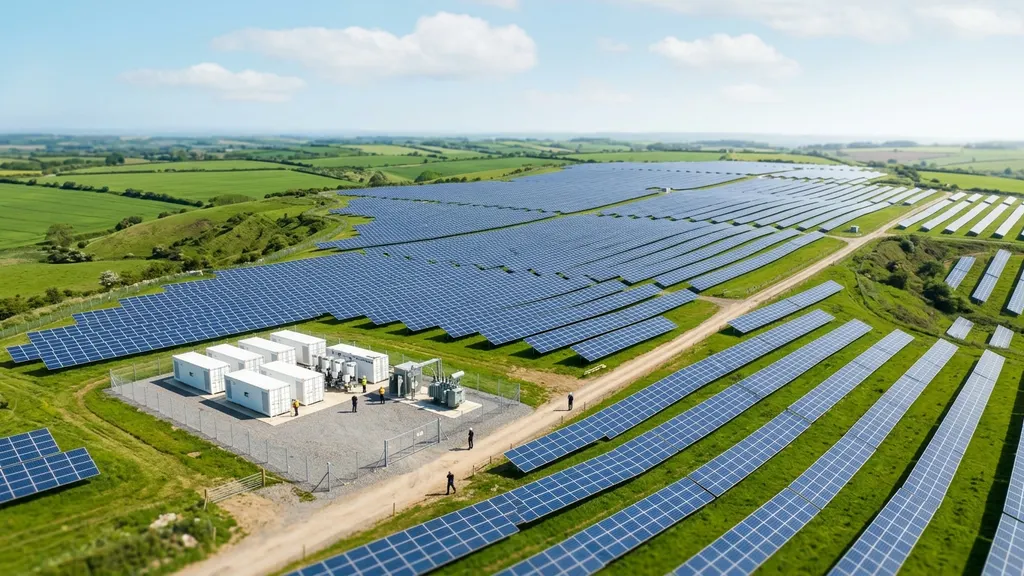
Standalone battery storage project finance underwriting also accounts for basis risk between forecast and realized arbitrage. ERCOT's recent volatility, with intraday spreads sometimes exceeding $5,000/MWh during scarcity events, can generate windfall years but cannot be modeled into base debt service. Lenders cap the merchant component of base-case revenue and treat windfall events as cash sweep upside. The pattern mirrors residential solar ABS underwriting; methods we covered in our residential solar ABS rating methodology piece apply with adjustments for shorter weighted average life and higher tech risk.
For a closer look at this, see Merchant Solar Revenue Risk: Lender Underwriting Framework for 2026.
Frequently asked questions
What is standalone BESS project finance?
Standalone BESS project finance refers to non-recourse debt and equity raised against battery energy storage system cash flows where the asset operates independently of generation, rather than co-located with solar or wind. Revenue blends capacity payments from RTO auctions or bilateral contracts, ancillary services revenue from frequency regulation and reserves, and energy arbitrage between off-peak charging and peak discharge. Lenders model each stream separately, apply distinct counterparty risk weights, and stress dispatch optimization across cycle life. Utility Dive storage coverage tracks how transaction volume has accelerated since IRA passage opened the ITC to standalone projects.
How does Section 48E change project economics for storage?
IRA Section 48E established a technology-neutral 30% base investment tax credit for energy storage placed in service after December 31, 2024. Before this rule, standalone storage was ITC-ineligible unless charged primarily from co-located solar; now it qualifies on its own. Bonus adders for domestic content and energy community siting can push total credit to 50%. Transferability under Section 6418 lets developers sell the credit directly rather than syndicating tax equity, simplifying the capital stack. The change rerated equity returns across the merchant tier per DOE technical guidance and recent trade press analysis.
Can lenders underwrite a fully merchant battery project?
Yes, but at a cost. Fully merchant standalone BESS projects raise senior debt at lower loan-to-cost, with 1.30-1.40x DSCR on P50 cases versus 1.20x P90 on toll-contracted projects. Equity sponsors demand 300-500 basis points higher returns to absorb dispatch volatility. Project finance market data suggests merchant-only deals fund about 45-55% senior debt versus 60-65% on contracted structures. Lenders increasingly require a hedge layer, often a financial swap with an investment-grade counterparty, to compress revenue variability into a band that supports rated debt. FERC market data tracks aggregator participation that adds a quasi-merchant revenue line.
What capacity degradation rate do lenders assume for a 20-year horizon?
Most 2026 underwriting models assume 2-3% per-year energy throughput degradation for LFP chemistry under a moderate cycling profile, falling to about 70% of nameplate by year 10 and 60% by year 15. NMC chemistry sees faster fade. The model usually layers an augmentation schedule: a cash reserve or recurring capex line that funds cell additions to hold contracted output level. Sandia National Laboratories field studies anchor most lender base cases, and lenders cross-reference their published degradation data against OEM warranty guarantees. The augmentation cost runs about $4-12 per kWh-year depending on chemistry, climate, and dispatch intensity.
How do tolling agreements compare to capacity contracts?
A tolling agreement transfers dispatch rights to the offtaker, who pays a fixed availability payment in exchange for control of charging and discharging. The developer earns a stable fee regardless of market conditions. A capacity contract pays the developer for committed kW of available capacity, but the developer retains dispatch rights and keeps energy and ancillary revenue upside. Tolling converts a merchant asset to fully contracted; capacity contracts split the risk. Lenders price tolling at the lowest cost of debt, capacity contracts moderately higher, and pure merchant projects highest. EIA monthly electricity data tracks the contract mix nationally.
What is the typical 2026 capital stack for a standalone BESS project?
A typical 2026 standalone BESS capital stack runs 50-55% senior debt, 20-25% tax equity, and 20-30% sponsor equity. Section 48E transferability has thinned the tax equity tranche on smaller deals where developers prefer to sell the credit outright rather than syndicate. Senior debt prices over SOFR plus 200-275 basis points for contracted projects, 275-375 bps for hybrids, and 375-475 bps for merchant structures. Mini-perm tenors of 7-10 years remain common, with a refinancing event after operational track record. Wood Mackenzie storage market reports publish quarterly debt-sizing and pricing benchmarks against this stack architecture.